
The safest way to ship a classic car is an enclosed trailer, booked one to two weeks ahead, loaded with soft wheel straps instead of frame chains, covered by a written cargo-insurance limit that exceeds your car's agreed value, and documented with photos plus a carefully inspected Bill of Lading at both ends. Budget roughly $700–$1,200 for a move under 500 miles, $900–$1,700 for 500–1,500 miles, and $1,600–$2,800 coast to coast in an enclosed rig — typically 30–60% more than open transport on the same route. Transit itself runs about 1–3 days under 500 miles and 7–10 days coast to coast, plus the wait for an enclosed truck to come free.
A classic is not a daily driver with a higher price tag. The paint may be single-stage lacquer no body shop will match, the trim may be unobtainable, and an insurance check — even a fair one — does not put the car back the way it was. Here is what actually protects it.
1. Pick the right trailer — enclosed is usually, but not always, the answer
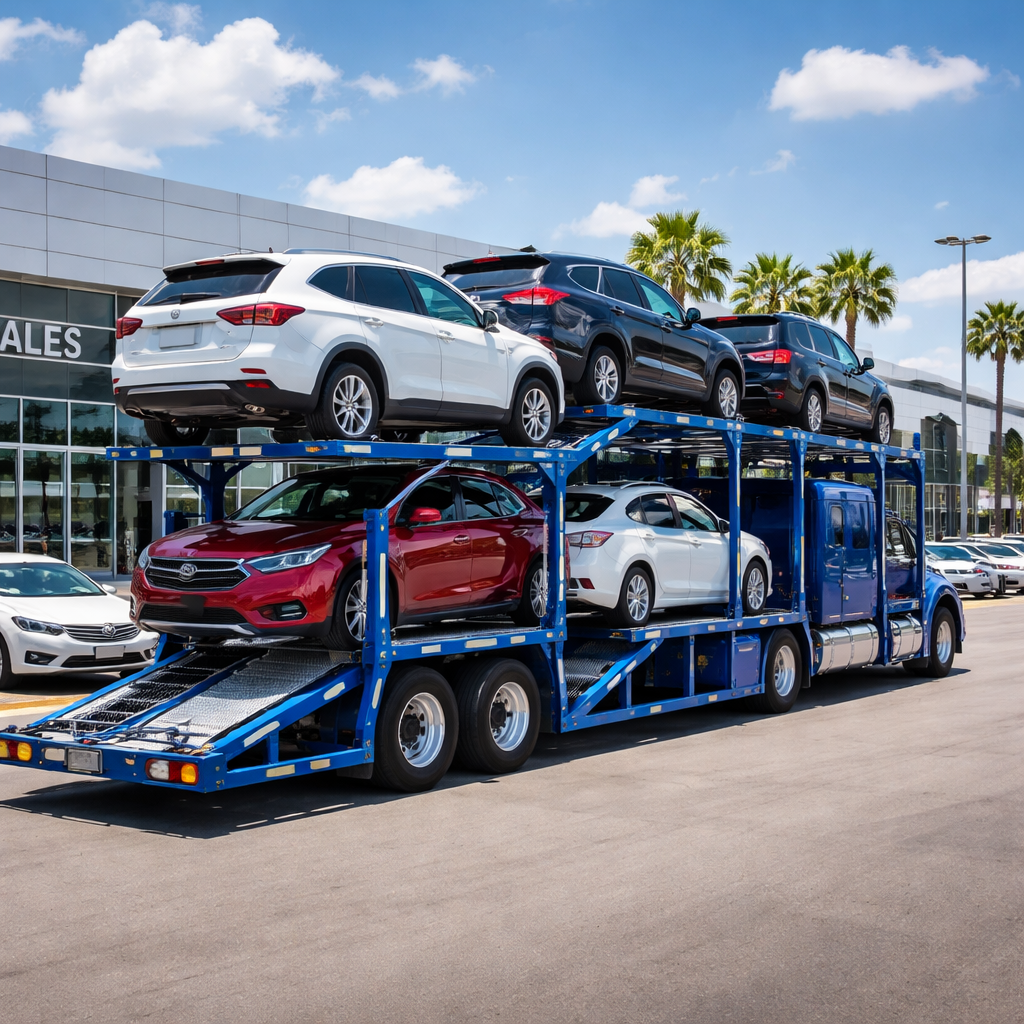
An open carrier hauls 7–10 cars on two exposed decks. It is how nearly every new car reaches a dealership, and it is safe enough for a driver-quality car. What it cannot do is keep out road debris, hail, salt spray, or fluid drips from the vehicle loaded above yours.
Enclosed auto transport puts the car inside a hard-sided or soft-sided trailer that usually carries only 2–7 vehicles. Because those rigs are a small minority of the trucks on the road and haul fewer cars per run, they cost more and take longer to schedule. In exchange you get weather protection, no road rash, a hydraulic liftgate on most high-end trailers, and a driver who loads collector cars daily rather than occasionally.
When open transport is genuinely fine: choose it if the car is a solid driver-condition example, the route is short and dry, the value is under roughly $30,000, and the savings matter more to you than the risk of a rock chip. Ask for a top-load position — the upper deck, where nothing can drip on you — which usually adds about $100–$200. Choose enclosed if the car is show-quality or numbers-matching, if the paint or brightwork is irreplaceable, if it sits low, if it is worth six figures, or if the move crosses the salt belt between November and March.
2. What classic car shipping actually costs
Auto transport is a spot market: the price is whatever it takes to get a driver to say yes this week on this lane. Typical enclosed ranges:
- Under 500 miles: $700–$1,200. Short runs price near the carrier's minimum, so the per-mile rate looks terrible.
- 500–1,500 miles: $900–$1,700, depending on how busy the corridor is.
- Coast to coast (2,500–3,000 miles): $1,600–$2,800.
What moves those numbers:
- Route density. Los Angeles to Dallas is cheap because trucks run it constantly. Rural Montana to rural Maine is expensive because a driver must deadhead to reach you.
- Operability. A car that will not start needs a winch and extra hands. Expect $100–$250 more, and disclose it up front — a driver who arrives to a surprise non-runner can refuse the load.
- Ground clearance. Standard ramps are too steep for many lowered or low-nose cars. A liftgate trailer commonly adds $100–$300.
- Season. Enclosed capacity tightens hard around the January Arizona auction week, Amelia Island in March, Monterey Car Week in August, and Hershey in October. Book earlier or pay more.
- Flexibility. A three-day pickup window is cheaper than a specific date. Guaranteed or expedited pickup carries a premium.
A live quote for your specific car, lane, and trailer type takes about two minutes on the instant quote form, and it will tell you what the current market is actually paying on your route.
3. Document the car before the truck arrives
Almost every transport dispute is really a documentation dispute. Wash the car first — dirt hides the chips and scratches that already exist, and you want those on record.
Then shoot 30–50 timestamped photos in daylight: all four corners, each wheel and its face, the roof, the glass, the odometer, the interior, the engine bay, and close-ups of every existing flaw with something in frame for scale. Video a slow walk-around. On a high-dollar car, a pre-shipment condition report from a detailer or appraiser is worth the couple hundred dollars.
At pickup, the driver fills out the Bill of Lading, the legal condition record for the move. Walk the car with the driver and make sure every existing defect already on the car is marked. At delivery, inspect before you sign. If the truck arrives after dark or in rain, note "inspection pending — delivered at night" on the Bill of Lading before signing. Once you sign a clean delivery, a damage claim becomes extremely difficult to win.
4. Prep checklist
- Fuel to a quarter tank or less. Gasoline weighs about 6 pounds a gallon and carriers run against an 80,000-pound federal gross limit.
- Fix or report leaks. On an open carrier a leak drips onto the car below you, and that becomes your problem.
- Check tire pressure, brakes, and battery so the car drives on and off under its own power.
- Disable the alarm and write down any kill switch, hidden fuel cutoff, or starting quirk for the driver.
- Fold in mirrors and secure loose trim, spotlights, hood ornaments, and anything that could vibrate free.
- Latch the convertible top fully, or transport it under a soft cover.
- Empty the car. Carriers are not authorized to haul household goods; most allow up to about 100 pounds in the trunk and none of it is covered by cargo insurance. Remove toll transponders and the garage remote.
- Check antifreeze if the route crosses the northern tier in winter, especially in a car that has been sitting on plain water.
5. Vet the carrier, not just the quote
The lowest bid in this industry is often a placeholder that gets re-posted at a higher price when no driver takes it. Before you commit, verify:
- Active operating authority. Every legitimate carrier and broker has a USDOT number and an MC number you can check for free in the FMCSA SAFER system at safer.fmcsa.dot.gov. Brokers must also hold a $75,000 surety bond on file with the Federal Motor Carrier Safety Administration.
- The actual cargo insurance limit. Federal rules require for-hire carriers to carry at least $750,000 in public liability coverage — but that pays for damage to other people and property in a crash. It is not coverage for your car. Cargo insurance is a separate policy. Ask for the certificate of insurance, confirm the limit is per load and still exceeds your agreed value with other cars on the trailer, and ask what the deductible is, because a $1,000–$2,500 deductible often lands on the shipper.
- Tie-down method. The right answer is soft wheel straps or nets over the tires, which leave the suspension and frame untouched. Chains hooked to a frame or axle are standard for repossessed pickups, not restored cars.
- Whether the price is locked. Get it in writing, with the pickup window, the total, and what happens if the driver cancels.
- Door-to-door, not terminal-to-terminal. Every extra handoff and every night in a storage lot is risk. Door-to-door service means one driver, one loading, one unloading.
Olympic Auto Transport has arranged open and enclosed moves for more than 15 years, is licensed and bonded, ships door-to-door, and includes cargo insurance on every vehicle. Our classic car transport service handles the liftgate, low-clearance, and non-running cases that trip up general freight brokers.
How long it takes
Plan two clocks. The first is finding an enclosed truck on your lane: commonly 3–10 business days, longer to or from rural areas. The second is the drive itself — about 1–3 days under 500 miles, 2–4 days for 500–1,000, 3–6 days for 1,000–2,000, and 7–10 days coast to coast, since federal hours-of-service rules cap a driver near 500–600 miles a day. If the car has to be somewhere on a date, add a week of buffer.
Frequently asked questions
How much does it cost to ship a classic car?
Enclosed transport generally runs $700–$1,200 under 500 miles, $900–$1,700 for 500–1,500 miles, and $1,600–$2,800 coast to coast — about 30–60% above open transport on the same route. Non-running cars, low ground clearance requiring a liftgate, rural pickup addresses, and auction season all push the number higher.
Do classic cars have to be operable to be shipped?
No. Non-running cars ship all the time, but they must be disclosed when you book, because they need a winch and, ideally, a liftgate trailer. Expect roughly $100–$250 in additional charges. The car does need to roll, steer, and brake for a standard winch load; if it does not, say so, since that requires skates or a forklift.
Is enclosed transport worth the extra cost?
For a show car, a numbers-matching restoration, or anything above roughly $50,000, yes — the premium is usually a fraction of one paint repair. For a driver-quality car on a short summer route, open transport with a top-load position is reasonable and saves real money.
Does my collector car insurance cover the car during transport?
Sometimes, and often only partially. Many agreed-value collector policies cover the vehicle in transit, but some exclude it or require advance notice. Ask your agent specifically about coverage while the car is in a carrier's custody and get the answer in writing, then compare it against the carrier's cargo limit and deductible so you know which policy pays first.